
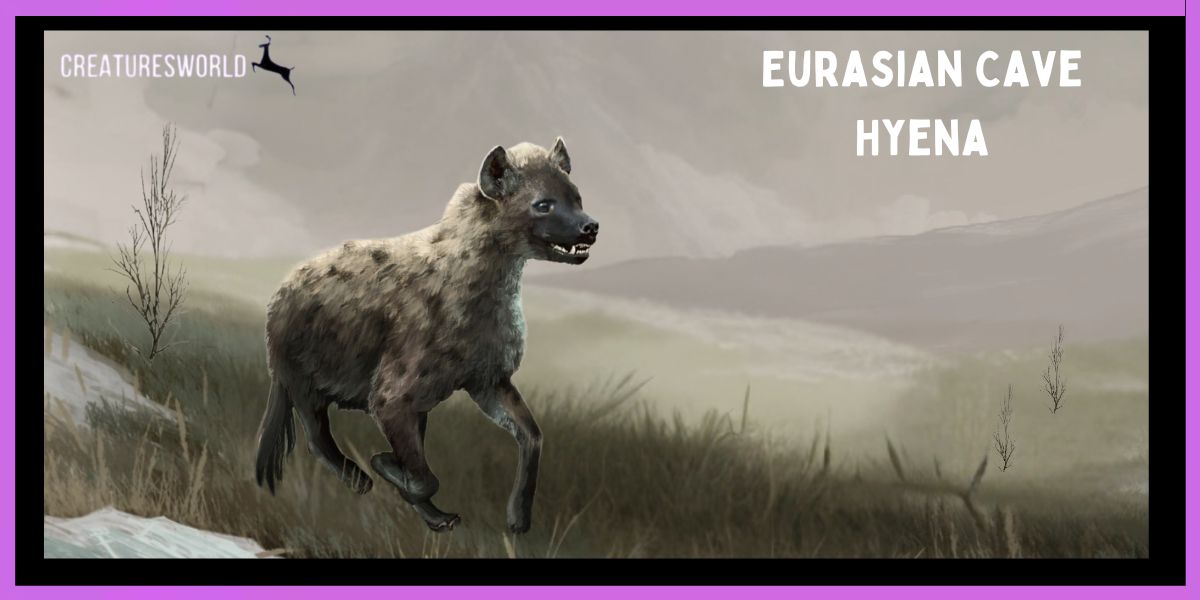
The Eurasian Cave Hyena scientifically known as Crocuta crocuta spelaea, was a deadly carnivore of the Pleistocene era. It is also Commonly referred to as the Eurasian Cave Hyena or the Ice Age Spotted Hyena. It was common all around Eurasia, ranging from Siberia to Western Europe, and it was an important scavenger and predator. Plenty of fossil remains, cave den evidence, and recent genetic research have provided new insights into its research.
Physical Characteristics Of Eurasian Cave Hyena
They were larger and more robust than modern spotted hyenas, an adaptation to the cold Pleistocene environments, the massive prey they pursued, and their specialised scavenging and hunting strategies.
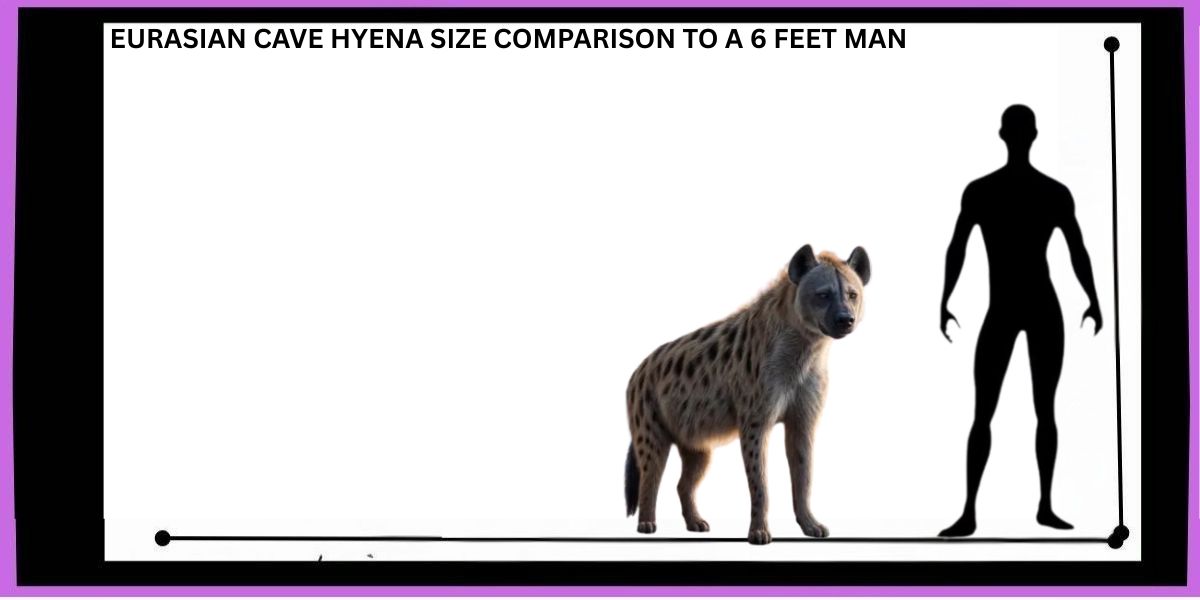
Adult males are estimated to have reached shoulder heights of 85–95 cm and body lengths of 150–180 cm, not including the short tail. Their weight generally ranged between 90–110 kg, with some exceptional individuals possibly exceeding 120 kg. A well-preserved specimen from Los Aprendices Cave in northern Spain is estimated to have weighed about 103 kg, placing it among the heaviest hyenids known from the Ice Age.
Their lower (near the paws) bones were shorter and stockier, while their limb bones were thicker, particularly in the humerus and femur, which were in comparison longer. According to their build, they were stronger and more suited to rough, snow-covered terrains than modern spotted hyenas, but they were less cursorial—not made for long-distance, high-speed chases.
Their massive jaw muscles were supported by large crested areas on their skulls. The dentition combined premolars that crushed bone with blades that could cut through flesh. Their jaws were adapted for bone cracking and bone extraction during more severe ice age times, while they relied more on meat slicing during interglacial times, according to fossil wear patterns, which suggests that their teeth changed slightly in usage depending on the climate.
The ability of cave hyenas to crush the thick bones of steppe bison (Bison priscus), woolly rhinoceroses (Coelodonta antiquitatis), and even young mammoths is demonstrated by fossilized dung (coprolites) and gnawed bone assemblages found in hyena dens. This illustrates both their ability to crush bones with their bites and their digestive adaptations, which enabled them to obtain nutrients and blood from meat that other predators were incapable of to consume.
Eurasian Cave Hyena Behaviour, Habitat & Social Structure
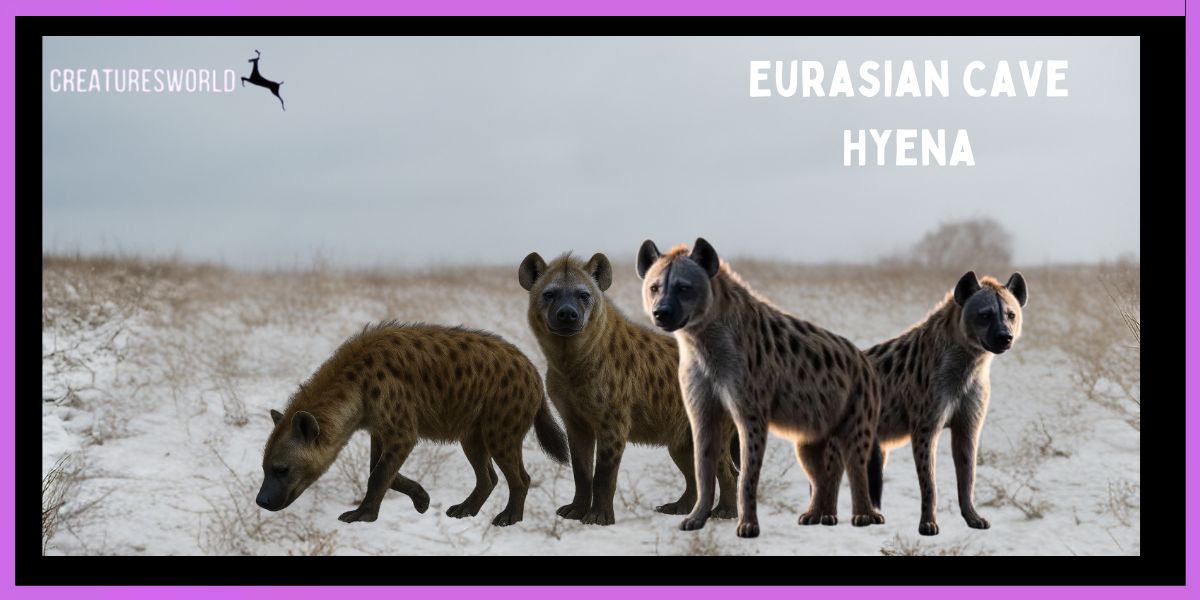
Similar to modern-day Spotted Hyenas, they lived in clans and used caves as communal living spaces, cub-raising dens, and prey places to store. Social behaviour is confirmed by fossils, which represent individuals of all ages gathering together.
Conflict and competition are demonstrated by the fact that caves containing both Neanderthal (Neanderthal = An extinct species or subspecies of human (Homo neanderthalensis) that lived in Europe and western Asia and was closely related to modern humans.) remains and hyena marks indicate that they occasionally scavenged from one another and fought over shelters. Neanderthal may have avoided or reclaimed hyena dens, while hyenas might’ve eaten Neanderthal remains.
Fossils from the Ural Mountains to Siberia point out their adaptability, suggesting that they probably migrated or traveled great distances in steppe and tundra regions to follow herds of prey.
Eurasian Cave Hyena Reproduction
Cave hyenas most likely had a complicated, female-dominated breeding system, just like their living relatives, the Spotted Hyenas (Crocuta Crocuta Crocuta). Alpha females dominated their clans and had priority on breeding. Although males fought for mates, reproduction was ultimately determined by female preference.
About 110 days (3.5 months) of gestation resulted in one to two cubs, rarely three. Caves provided safe havens for cubs from the harsh climates and predators of the Ice Age. Similar to contemporary hyenas, cubs were born with their eyes open and their teeth small. They also commonly showed early sibling rivalry, or sibling murder, in which the stronger cub defeated or killed the weaker one.
Mothers gave their cubs the strength they needed to survive by nursing them for 12 to 18 months and producing some of the richest milk of any mammal. Den fossils reveal the remains of both adults and cubs, suggesting that clans used the caves for generations.
Eurasian Cave Hyena Prey & Predators
Their prey included Steppe Horses (Equus Ferus Ferus,) and Przewalski’s Horse (Equus Ferus Przewalskii), along with the massive Steppe Bison (Bison Priscus), Woolly Rhinoceros (Coelodonta Antiquitatis), Irish Elk and Woolly Mammoth (Mammuthus Primigenius). They also hunted or Scavenged Reindeer (Rangifer Tarandus Tarandus) and occasionally clashed with powerful rivals such as the Cave Bear (Ursus Spelaeus), Cave Lion (Panthera Leo Spelaea), and Ice Age Wolf (Canis Lupus Spelaeus). Even early Humans were part of this web, with Neanderthals leaving evidence of both conflict and competition with Hyenas for caves and resources.
Everything I ( I, Kabir Thakur) have written here is thought out and well research processed Information, As soon new news come out about them I will update as soon as I can. Please comment me for your doubts and to correct me if I am wrong.
